Redirect connections of any internet app (browser, email, database, game, etc.) through a proxy.

Control access to resources. Route all your connections through a single entry point. Update multiple configurations remotely from a single place.

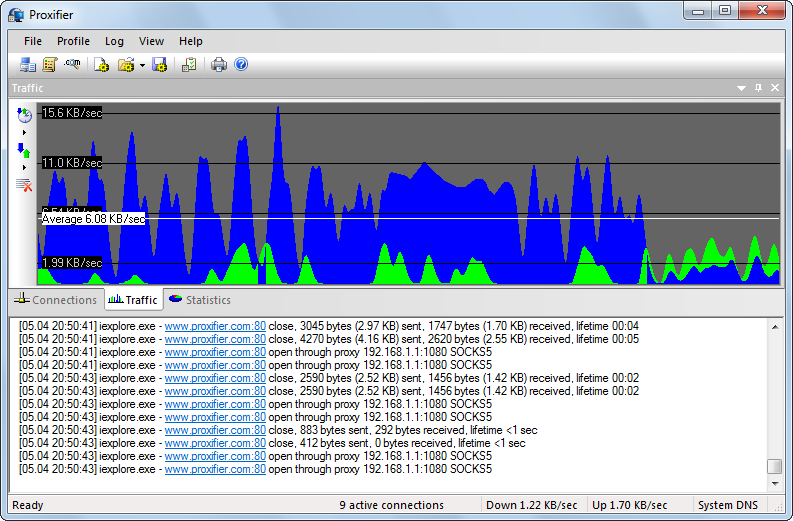
Route internet traffic through faster routes.

Lightweight and flexible alternative to VPN. Tunnel your connections through encrypted channels.

Use a proxy as a gateway for your internet activities.

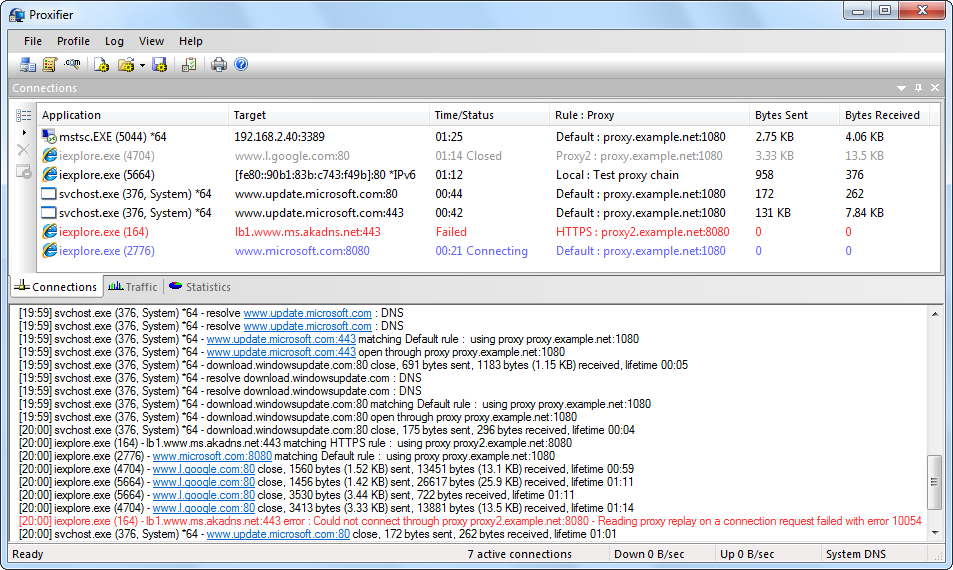
Assign different proxies or chains to different connections using the rule-based system.
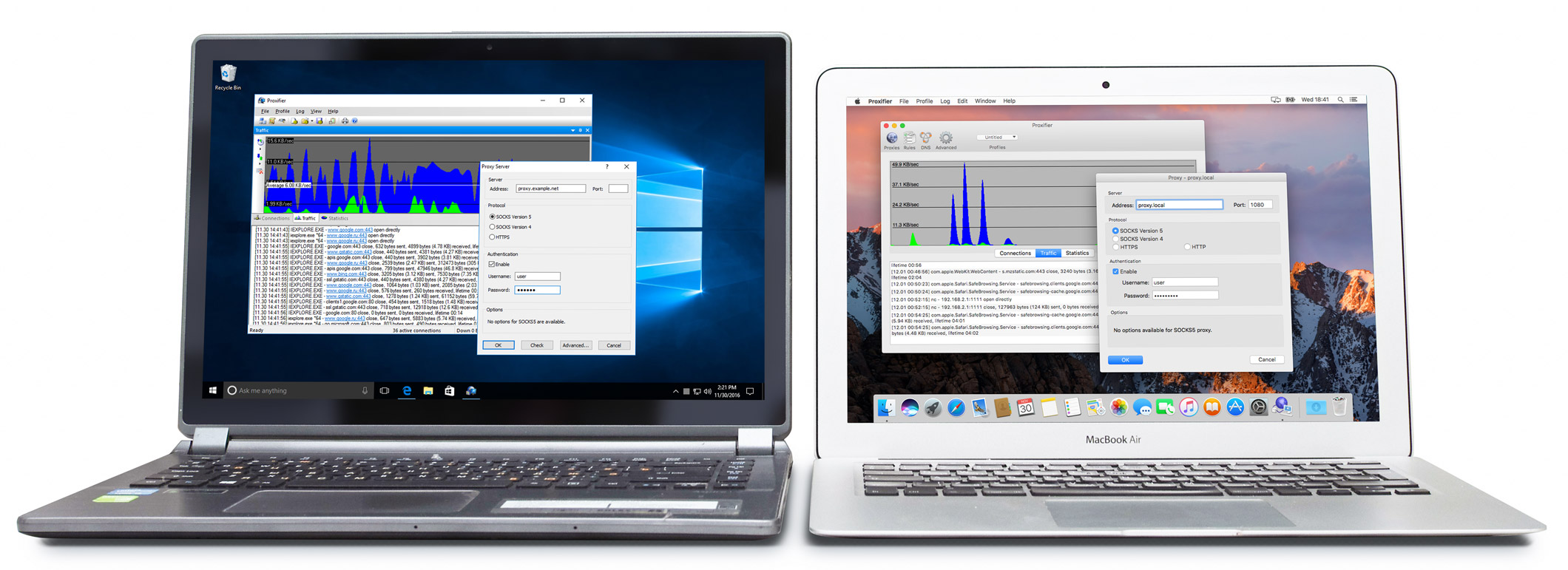
Proxifier is always up to date with the latest OS versions of Windows, macOS and Android.
IPv6, HTTP(S), SOCKS, DNS via Proxy, Proxy Checker, NTLM, Windows Service, XML Config, Proxy Redundancy.
Native C++ app. No third-party dependencies. Installer size is 4 MB.
Transparent handling of connections on the system level. Best-in-class compatibility with third-party apps.
In a corporate network of 500 computers, Proxifier is deployed to forward connections through the proxy. The configuration gets managed remotely from a single control point.
A gamer from Asia has connectivity problems when playing on a US server. With Proxifier, he optimizes the routing with a chain of proxy servers.
A user needs to load-balance connections across multiple proxies. Proxifier can do this and also provide an automatic fallback if proxy is down.
Remote workers and road warriors use Proxifier as a lightweight alternative to VPN. Flexible rules allow tunneling of selected apps and targets.
A user needs to encrypt traffic for an app that does not support SSL. Proxifier forwards traffic though an SSH or SSL tunnel.
A support team needs to control the availability and performance of a service in multiple distant regions. With Proxifier, they easily switch between multiple proxies to simulate a local presence.
Social media platforms like TikTok, Instagram, and YouTube have democratized content creation. The "audience" is now the "creator." This shift has birthed the , where a person filming in their bedroom can command more attention—and advertising revenue—than a traditional television network. Popular media is no longer just about what Hollywood produces; it’s about what the global community shares.
Entertainment content also plays a significant role in shaping social norms and attitudes. The portrayal of certain behaviors, lifestyles, and relationships in popular media can influence how we think and behave. For example, the representation of LGBTQ+ characters in TV shows like "Modern Family" and "Transparent" has helped to promote acceptance and understanding of diverse sexual orientations and gender identities. On the other hand, the glorification of violence and aggression in some entertainment content has been linked to increased aggression and violence in real life. xxxxnl videos free
For decades, popular media was a one-way street. Families gathered around the radio or the television set, consuming whatever the major networks decided to air. This "appointment viewing" created a unified cultural language; everyone was watching the same sitcom or news broadcast at the same time. Social media platforms like TikTok, Instagram, and YouTube
The landscape of entertainment and popular media has transformed from a top-down broadcast model into a decentralized, hyper-personalized ecosystem. Once defined by shared cultural "water cooler" moments—where a single television finale or album release dominated the collective consciousness—modern media is now characterized by the "Long Tail" and the rise of the individual creator. The Shift from Curation to Algorithms Entertainment content also plays a significant role in
: Platforms like TikTok and YouTube have transformed audiences from passive viewers into active content creators, altering how media is produced and monetized. Synergy Over Competition