Please use croppola on your laptop or desktop computer.
Croppola crops your photos intelligently.
Croppola analyzes the composition of your picture and calculates the best crop. Just drop a photo, select the desired aspect ratio, and watch croppola do its magic!
Change the aspect ratio of a photo
You have a portrait photo, and want a nice 4:3 landscape crop for your latest presentation slides. Croppola will find a well-balanced part with the desired aspect ratio within your picture - quickly and painlessly.

Enhance your holiday pictures or snapshots
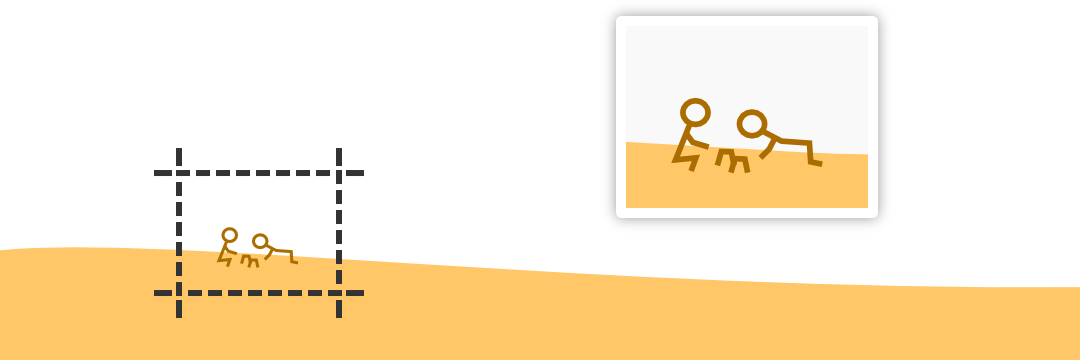
You took snapshots of your kids playing on the beach, and want to improve the framing. Croppola will analyze your photos and suggest well-balanced crops.
Prepare photos for your photobook, calendar, or wallpaper
You are creating a calendar. Let croppola choose a nice crop for you.

Experiment with image composition
You took a great shot and are looking for a perfectly balanced composition. Let croppola make suggestions, and fine-tune manually.

Your smartphone screen is too small for croppola. Please try croppola on your laptop or desktop computer!
Missax.19.10.07.vera.king.dont.say.a.word.act.1...
The MissaX19.10.07: Vera King - Don't Say A Word Act 1 remains an intriguing topic, with limited information available. This blog post aims to provide a neutral and informative overview, acknowledging the gaps in knowledge and encouraging further research. If you're interested in learning more, I recommend exploring additional resources or reaching out to Vera King or the production team directly.
The camera caught a flash: a small slip of paper fell from the notebook as M’s hand grazed it. It fluttered beneath the piano and came to rest against the worn left pedal. The man did not notice. He asked if Vera had uploaded Act One anywhere. She said she had not. She had left it in the world, she said, in forms that could not be hunted by listening devices — in mosaics, in children’s chalk drawings, in hums along the subway lines. M’s smile was a fissure. He left without raising his voice. MissaX.19.10.07.Vera.King.Dont.Say.A.Word.Act.1...
Because it is "Act 1," the pacing is deliberately measured. Viewers looking for immediate, frantic action might find the buildup slightly agonizing, but that is entirely the point. The pacing serves the psychological thriller aspect of the production. It’s an exercise in edging—not just for the characters, but for the audience. By the time the physical boundaries are fully crossed, the release of tension feels earned rather than arbitrary. The MissaX19
No applause answered. Only the hum of the building’s veins. Vera opened a battered notebook and began to read lines as if from a script — lines that alternated between an actor practicing and a confessor recalling a life. The text folded inward: memory, rehearsal, accusation. She read about a girl named Lila who’d learned to silence herself to survive a household where words cracked like plates. She read about small rebellions: humming under breath, writing names on the undersides of drawers, sending secret moonlit letters folded into envelopes with no return address. The camera caught a flash: a small slip
At 44 minutes and 12 seconds, a shadow crossed the doorway. Vera stopped playing. The shadow moved into the frame: a man with a jacket buttoned to the throat, a hat pulled low. The recording’s angle did not change, but the man’s presence made the room narrower. He carried himself like a memory walking on legs.